

Dietary Guidelines to Help Influence Better Results
In part 1 of this series, I went over the most common type 1 diabetic frustrations we commonly face, the mechanisms behind their existence, and their impact on unstable blood sugars and other health concerns that may result.
The most common type 1 diabetic problems I focused on were:
- Waking up with high blood sugars
- Blood sugar roller coasters (glycemic variability)
- Increased depression and/or anxiety with blood sugar mismanagement
Today’s post will cover a few dietary templates to get the ball rolling in addressing these issues with the help and guidance of your diabetic physician.
In addition, I’ll go over the common pros and cons of these dietary suggestions.
Let’s now unlock some dietary protocols that may reduce many of these type 1 diabetic annoyances!
Dietary Suggestion #1: A Low-Carb Diet
Dr. Richard Bernstein is a medical doctor who was diagnosed with type 1 diabetes in 1946 when he was just 12 years old.
At the time of this writing, he’s now 89 and has no diabetic complications, which is a remarkable accomplishment for a type 1 diabetic to have attained, especially at his age!
Dr. Bernstein is the author of a book I highly recommend every type 1 diabetic read called, Diabetes Solution (1).
In this book, he goes over a very strict diet regimen he and his patients follow that has produced blood sugar results he feels are the reason for his longevity of health without experiencing common complications most other diabetics typically do by his age.
They’re able to achieve this along with healthier and more consistent postprandial (aka pos-meal) blood sugars by minimizing their carbohydrate intake.
In addition, they focus on higher protein consumption as it will normally keep one full longer (minimizing snacking) and increase blood glucose levels but in much smaller and predictable amounts.
The Low-Carb Pros

A. The Lower the Carb Intake, the Lower the Insulin Demand
Pharmaceutical insulin’s main objective is to take glucose out of the blood to avoid chronically high blood sugars, aka hyperglycemia.
Drastically reducing carb intake helps to minimize insulin demand.
B. Reduced Insulin Demand Decreases Further Insulin Resistance
In the previous post I mentioned how the body attempts to protect itself when too much insulin is being used by means of insulin resistance.
Decreasing insulin demand reduces insulin resistance from being triggered, which would otherwise further complicate blood sugar stability.
C. Fewer Insulin-Dosing Variables to Calculate Leads to Less Guesswork and Reduced Blood-Sugar Mistakes

It is quite common for more reliable and predictable blood sugars when reducing your carb intake with most, if not all, of your meals.
There was a Harvard and Duke University study performed on type 1 diabetic adults and children that followed a low-carb plan with their A1Cs resulting in an average of 5.6% (2).
Another study among type 1 diabetics had similar results with more stable blood glucose levels, as well (3).
There are other type 2 diabetes and prediabetes studies that also show better glycemic control on a low-carb diet (4, 5).
The Low-Carb Cons
A. Accepting Whole Foods as the Predominant Food Choice
How much sugar we consume ultimately has an enormous impact on not only diabetic management protocols but also its results.
In his book, Dr. Bernstein does not discriminate against eating highly refined and processed foods as long as they fit within his low-carb recommendations.
But I do.
Many of these Frankenfoods also contain gluten and I’ve written about how they may impact diabetic, immune, and gut health here.
Regardless of its sugar content, I do recommend type 1 diabetics remove highly processed and refined foods from their diet.
We already know how quickly they enable blood sugar spikes.
The high fructose corn syrup added to many flavorful foods may also impact blood sugars more than a type 1 diabetic would like (6).
In addition, FDA guidelines allow nutrition labels to be up to 20% inaccurate, which changes things dramatically among type 1 diabetics whose insulin calculations rely heavily on some of this dietary information’s accuracy (7).
Most refined and processed foods are largely stripped of their original nutrient, fiber, and protein content, leaving one susceptible to not feeling full and overconsuming these foods.
Eating primarily whole foods normally gives more reliable carb and protein data to use for insulin injections, which typically leads to more reliable blood glucose results (8).
In addition, increasing vegetable consumption will not only help to reduce carb intake but also lessen overconsumption risk due to the increased dietary fiber (9).
A recent study also brings to light how important micronutrient intake (vitamins, minerals, and phytonutrients) helps to prolong healthy aging (10).
Most of which are easier to find in whole foods.
In addition, an argument is made that the Recommended Dietary Allowance (RDA) for most nutrients is significantly lower than it should be.
Sadly, most of us are falling short of the RDA for many important nutrients our bodies need.
To make matters worse, gut dysbiosis is a condition that appears to coincide with autoimmunity.
This means that even if a type 1 diabetic is eating a healthy diet, they may not be able to absorb all the nutrients consumed because of this gut dysfunction.
I go over more gut info and dysbiosis in part 3.
I’ve also written extensively on the gut’s function and how it’s associated with type 1 diabetes and its management here, as well.
A quick summary of consuming more whole foods and its benefits:
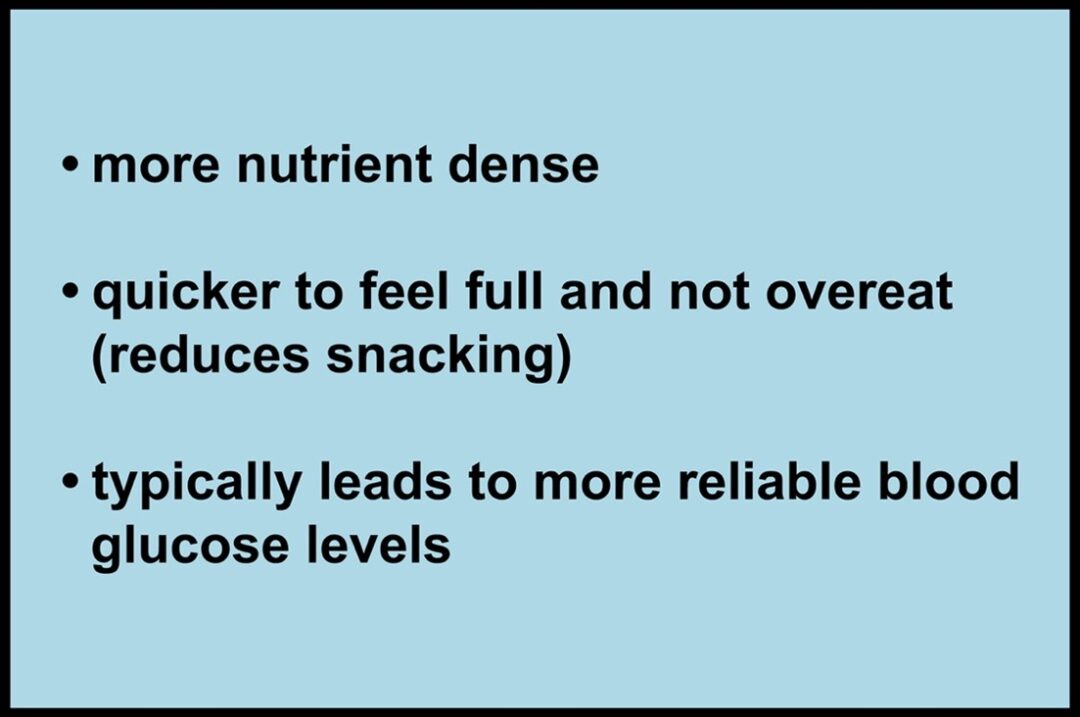
Despite the obvious benefits of eating more nutrient-dense whole foods while reducing carb intake for more stable blood sugars, the “addictive” impact I discussed in the previous post might make this suggestion more difficult to conquer in the beginning stages.
What helps me to address this concern is to remove these tempting foods as an option.
If you can’t consider eating them, then it’s one less thing for you to have to worry about!
This is why I completely gut my kitchen of any tempting foods!
Again, I know this can be easier said than done but diet is a major factor in blood sugar regulation that needs to be heavily considered for consistent and successful results.
And if you’re sick and tired of being sick and tired, this normally isn’t much a problem.
B. Reduced Fiber Intake
The blood sugar benefits from eating a low-carb diet can be quite remarkable, however, reduced fiber intake is a common flaw with this dietary approach.
The RDA states we should eat a minimum of 25 grams of fiber/day.
Americans average 10 – 15 g/day, which ranks the US as the worst globally (11, 12). Keep in mind, this is also without any dietary restrictions!
Meanwhile, hunter and gatherer groups will consume anywhere between 100 – 150 grams of fiber/day (13, 14).
Most starches and fruits, which contain a high amount of fiber, are typically excluded from a low-carb diet due to some of their high-carb content.
Removing these important fibers may further complicate diabetic and gut health.
Health Benefits of Fiber:

- Blood Sugar Support
Fiber is not digestible; therefore, it will not raise blood sugar (15).However, fiber does absorb glucose, which helps to reduce blood sugar spikes.Not a bad weapon to have if one isn’t producing any insulin, am I right?!This is why it’s recommended to eat fiber and protein first before ingesting any carbs to help lessen blood sugar spikes (16). - Heart Health
Increased fiber intake helps lower blood pressure and cholesterol, which are common diabetic precursors and symptoms.
- Gut Health
During digestion, fiber turns into short-chain fatty acids, which feed the microbes (gut bugs) in our intestinal microbiome and help them grow (17).Our beneficial microbes will consume these short-chain fatty acids to help to protect us from gut distress such as constipation, irritable bowel syndrome (IBS), diverticulitis, gut dysbiosis, and heart disease.A healthy gut also helps with better blood sugar regulation (18). - Reduces Snacking
Many vegetables like carrots, broccoli, spinach, kale, and collard greens contain a good amount of fiber per serving.Increasing fiber and protein intake should not only help you feel full more accurately but quicker when compared to eating junk food (19).As a result, reduced snacking is common in addition to weight loss (20).
The Answer to the Low Fiber Problem in a Low-Carb Diet
Prebiotics help feed our gut bugs to more prosperity. The catch, however, is to make sure there’s an overpopulation of good gut bugs to feed.
This helps to optimize gut function.
Many fibers are considered as prebiotics
Prebiotic supplementation may be helpful in addressing this likely fiber discrepancy while on a low-carb diet.
These supplements do not typically increase blood sugar levels.

As a result, taking care of one’s gut health should strongly be considered as it influences almost all aspects of health, including diabetes (21).
Some common supplements to consider with your physician are glucomannan, psyllium husk, and resistant starch. These are a few that I take among others.
Taking prebiotics along with probiotics will typically reinforce more beneficial microbe growth.
This is because probiotics are the actual beneficial microbes, themselves.
If you’re consuming enough fermentable foods (probiotics) and/or other qualitative probiotic supplements while increasing your prebiotic intake, this will normally be quite advantageous for your gut and diabetic health.
Successfully executing a low-carb diet regimen helps to influence insulin sensitivity, which in turn helps to reduce hyperglycemia in the mornings, roller coaster blood sugars, and assists in easier wins with blood glucose levels in between meals.
Lastly, adding all the gut health promotion suggestions should also help reinforce and alleviate many depression symptoms linked to the gut (22).
Dietary Suggestion #2: Minimize Glucose Spikes and Roller Coasters (Glycemic Variability)

Image source: https://www.instagram.com/p/Crn7yMhoORI/?igshid=MzRlODBiNWFlZA==
Glycemic variability refers to the fluctuations in blood glucose levels that more commonly occur after meals.
This typically starts with a skyrocketing blood sugar right after eating and then the rat race begins by trying to bring it back down, then up, then down, etc. until it’s back to a stable blood sugar level.
And this can take hours to accomplish, sometimes not ever!
I mentioned previously about eating fiber and protein before consuming any carbs to help reduce the intensity of blood sugar spikes.
This one suggestion was brought to my attention, among others, in a book called Glucose Revolution by the French biochemist Jessie Inchauspé (23).
This is another book I recommend all type 1 diabetics read as another resource for more options to use that may help better stabilize post-meal blood glucose levels.
The material goes over in more detail the effects of short- and long-term effects of blood sugar spikes and many other ways to flatten these postprandial blood glucose spikes.
The “Glucose Revolution” Pros
The information provided in this book entails medical research supporting how to reduce blood sugar spikes with any kind of meal you wish to consume.
It also goes over how problematic glycation can be and connects the dots to why diabetic complications occur as frequently as they do because of it.
Glycation is when sugar sticks to protein, fat, and DNA molecules, creating dysfunction among bodily tissues, blood vessels, tendons, skin, and nerves.
The effects of glycation rise with hyperglycemia (24, 25).
The “Glucose Revolution” Cons
As recommended with the Diabetes Solution, I strongly urge type 1 diabetics to minimize, if not eliminate, consuming processed foods with little to no nutrient value.
We’ve already gone over the greater likelihood of more positive blood sugar results in consuming more whole foods.
Adding a low-carb diet to this, in addition to many of the suggestions in The Glucose Revolution, will likely help to address many blood sugar problems from a dietary approach.
Again, you’ll need help from your diabetic healthcare provider before trying these suggestions out but the information is worth a look!
What if These Dietary Suggestions Don’t Work?

I’m well aware of type 1 diabetics out there that insist one or both dietary suggestions do not work for them.
If nothing is gaining positive traction within 30 – 60 days, there is likely more problematic gut dysfunction going on that needs to be addressed.
I’ll go over this gut info in more detail in part 3.
Summary
Dietary Suggestion #1: A Low-Carb Diet
- Typical Pros:
- ↓ carb intake → ↓ insulin demand → ↓ dietary insulin resistance → more reliable blood sugars
- Typical Cons:
- limit or eliminate highly processed and refined foods as most of these junk foods cause blood sugar spikes while also lacking any nutrition; many refuse to give up these tasty options
- whole food consumption is strongly encouraged; on paper almost everyone can agree with the benefits of this but successfully executing it may be a little tough in the beginning
- it’s common for a low-carb diet to limit quality fiber intake as many of them are carb-rich; fiber influences better gut health, blood sugar stability, heart health, and reduces snacking
- consuming fermentable fibers and foods, soluble fibers, and resistant starch or supplementing with some fibers may be useful in order to maintain a low-carb regiment; discuss this with your doctor
Dietary Suggestion #2: Reduce Glycemic Variability
- consume fibers and protein before ingesting any carbs as this commonly lowers blood sugar spikes after meals
- many more suggestions can be found in the book The Glucose Revolution
- encouraged to stay away from consuming highly processed and refined foods and to eat as much whole foods as possible
What if these dietary suggestions don’t work?
- you likely have more problematic gut issues that need to be assessed and treated

References
2. https://pediatrics.aappublications.org/content/141/6/e20173349
3. https://pubmed.ncbi.nlm.nih.gov/28345762/
4. https://pubmed.ncbi.nlm.nih.gov/34984805/
5. https://www.health.harvard.edu/blog/low-carb-diet-helps-cut-blood-sugar-levels-in-people-with-prediabetes-202301032869
6. https://diabetesjournals.org/care/article/36/1/150/38265/Moderate-Amounts-of-Fructose-Consumption-Impair
7. https://www.fda.gov/regulatory-information/search-fda-guidance-documents/guidance-industry-guide-developing-and-using-data-bases-nutrition-labeling
8. https://pubmed.ncbi.nlm.nih.gov/6280621/
9. https://www.ncbi.nlm.nih.gov/pmc/articles/PMC6352252
10. https://www.pnas.org/doi/10.1073/pnas.1809045115
11. https://nutrition.org/most-americans-are-not-getting-enough-fiber-in-our-diets/
12. https://www.ncbi.nlm.nih.gov/pmc/articles/PMC5986507/.
13. https://www.npr.org/sections/goatsandsoda/2017/08/24/545631521/is-the-secret-to-a-healthier-microbiome-hidden-in-the-hadza-diet
14. https://med.stanford.edu/news/all-news/2017/08/hunter-gatherers-seasonal-gut-microbe-diversity-loss.html
15. https://www.cdc.gov/diabetes/library/features/role-of-fiber.html
16. https://www.jstage.jst.go.jp/article/jnsv/64/5/64_316/_article
17. https://www.ncbi.nlm.nih.gov/pmc/articles/PMC8153313
18. https://www.frontiersin.org/articles/10.3389/fendo.2018.00233
19. https://onlinelibrary.wiley.com/doi/full/10.1111/j.1467-3010.2007.00603.x
20. https://academic.oup.com/ajcn/article/87/5/1558S/4650426
21. https://www.ncbi.nlm.nih.gov/pmc/articles/PMC4566439/.
22. https://www.bmj.com/company/newsroom/probiotics-alone-or-combined-with-prebiotics-may-help-ease-depression/
23. https://www.amazon.com/Glucose-Revolution-Life-Changing-Power-Balancing
24. https://www.ncbi.nlm.nih.gov/pmc/articles/PMC5643203/.
25. https://www.ncbi.nlm.nih.gov/pmc/articles/PMC3583887/