
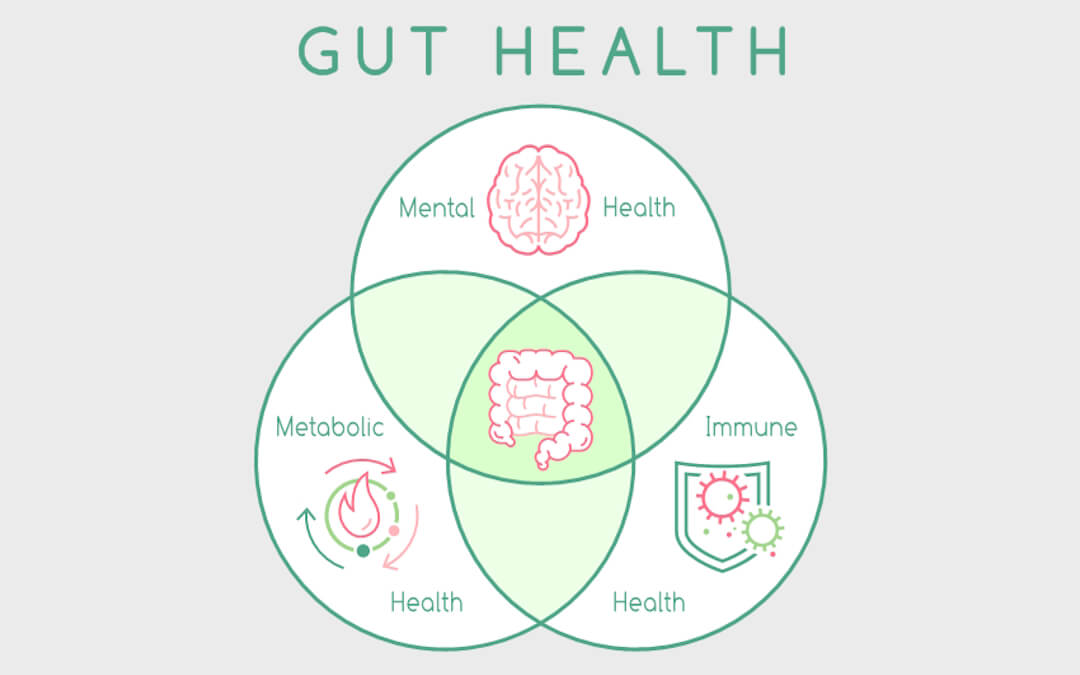
How Gut Health is Associated with Better Blood Sugars with Lower Depression and Anxiety
In the previous posts, I discussed some dietary templates that typically have a positive influence on common blood sugar frustrations.
In this final post, I’m going to go over why gut health is vital to a type 1 diabetic and how it’s connected to:
- better blood glucose levels
- depression and anxiety reduction
This info may very well fill the gaps for those who are doing everything they can to get the results they seek, yet aren’t!
Let’s get started!
Gut Basics 101
The gut, also known as the gastrointestinal (GI) tract, is a complex system that performs two primary functions in our bodies:
- digestion and absorption of nutrients
- protection from pathogens alongside the immune system
Both these functions are critical to overall health, even more so among those with autoimmune conditions, as you’ll soon see.
Let’s take a closer look at these two gut functions.
Gut Function #1: Digestion and Absorption of Nutrients
Digestion and absorption of nutrients is the more commonly recognized gut function.
It begins in the mouth where food is mechanically broken down, and then moves to the stomach where it is further dissolved by acids and enzymes.
In the small intestine, digestive enzymes break down the food into its component nutrients.
These macronutrients—carbohydrates, proteins, and fats—are then absorbed through the intestinal walls and transferred into the bloodstream, which then carries them to cells throughout the body.

These nutrients provide the energy required for all bodily functions, from thinking and moving to growing and repairing tissues.
Without proper digestion and absorption, our bodies would be starved of these essential nutrients, leading to malnutrition and a host of health issues.
The more common nutrient-health disorders seen among type 1 diabetics are (1, 2, 3, 4):
- cystic fibrosis
- celiac disease
- reduced absorption of B vitamins
- allergic diseases
Gut Function #2: Immune Assistance – Protection from Pathogens
The gut’s second primary function is less well-known but equally important.
A large portion of our immune system resides in the gut.
This is in part due to the gut-associated lymphoid tissue (GALT), which houses approximately 70 – 80% of the body’s immune cells (5).
These cells are essential in defending against pathogens and maintaining a balanced immune response.
The gut also hosts trillions of microbes (aka gut bugs), collectively known as the gut microbiota.
These microbes aid in digestion and play a pivotal role in immune regulation.
They help “train” the immune system to distinguish between harmful and harmless substances, reducing the risk of conditions such as allergies and autoimmune diseases (6).
They also produce substances that can inhibit the growth of harmful bacteria, further protecting us from infections.
In addition, recent research suggests that the gut microbiota influences our brain health and behavior through the gut-brain axis via bidirectional communications (7).

Imbalances in the intestinal microbiota, known as gut dysbiosis, have been linked to mental health conditions such as depression, anxiety, autism, bipolar disorder, and schizophrenia (8).
A healthy gut is a cornerstone to overall health as it contributes to a strong immune system, efficient nutrient uptake, and better mental well-being, among other benefits such as healthier blood sugar levels.
How is the Gut Connected to Troubling Blood Sugars?

Type 1 diabetics don’t make enough insulin, which is a hormone that helps your cells use sugar for energy.
Without enough insulin, sugar builds up in your blood, causing high blood glucose levels. This can lead to many health problems if not managed correctly.
Here are some ways gut dysfunction may influence blood sugar problems (aka dysglycemia) in type 1 diabetics:
Nutrient Absorption
Our gut’s main job is to break down the food we eat into tiny nutrients, like sugar/glucose, that our body can use for energy.
When our gut is working well, it absorbs these nutrients into our blood.
But if gut dysbiosis is present, it increases insulin resistance risk and/or may alter nutrient absorption (9).
This can cause sudden changes in blood sugar levels, making it harder for people with type 1 diabetes to manage their condition.
Keep in mind, if dietary intake of highly processed and refined food (junk food) is the standard, dysglycemia risk increases dramatically.
Gut Microbes
Our gut is home to trillions of tiny organisms called microbes.
These microbes help us break down food and even help to produce vitamins and energy for the body (10).
They also play a role in controlling our blood sugar levels.
Some of these microbes help our body use insulin better, while others can affect how much sugar gets absorbed into our blood (11).
Gut Hormones
Our gut makes hormones that help control our blood sugar levels.
Some of these hormones help our body make and use insulin properly.
Other hormones tell our body when we’re full, so we stop eating.
When our gut is not healthy, these hormones may be impaired or inactive, which can lead to problems with blood sugar management in people with type 1 diabetes.
Again, junk foods and other Frankenfoods foods are known to disrupt this “full” feeling while eating, which can lead to overconsumption of these highly caloric/low-nutrient foods.
Incretins are examples of gut hormones that help balance blood sugars.
These metabolic gut hormones stimulate blood sugar reduction by helping to increase insulin secretion among non-diabetics after meals (12).
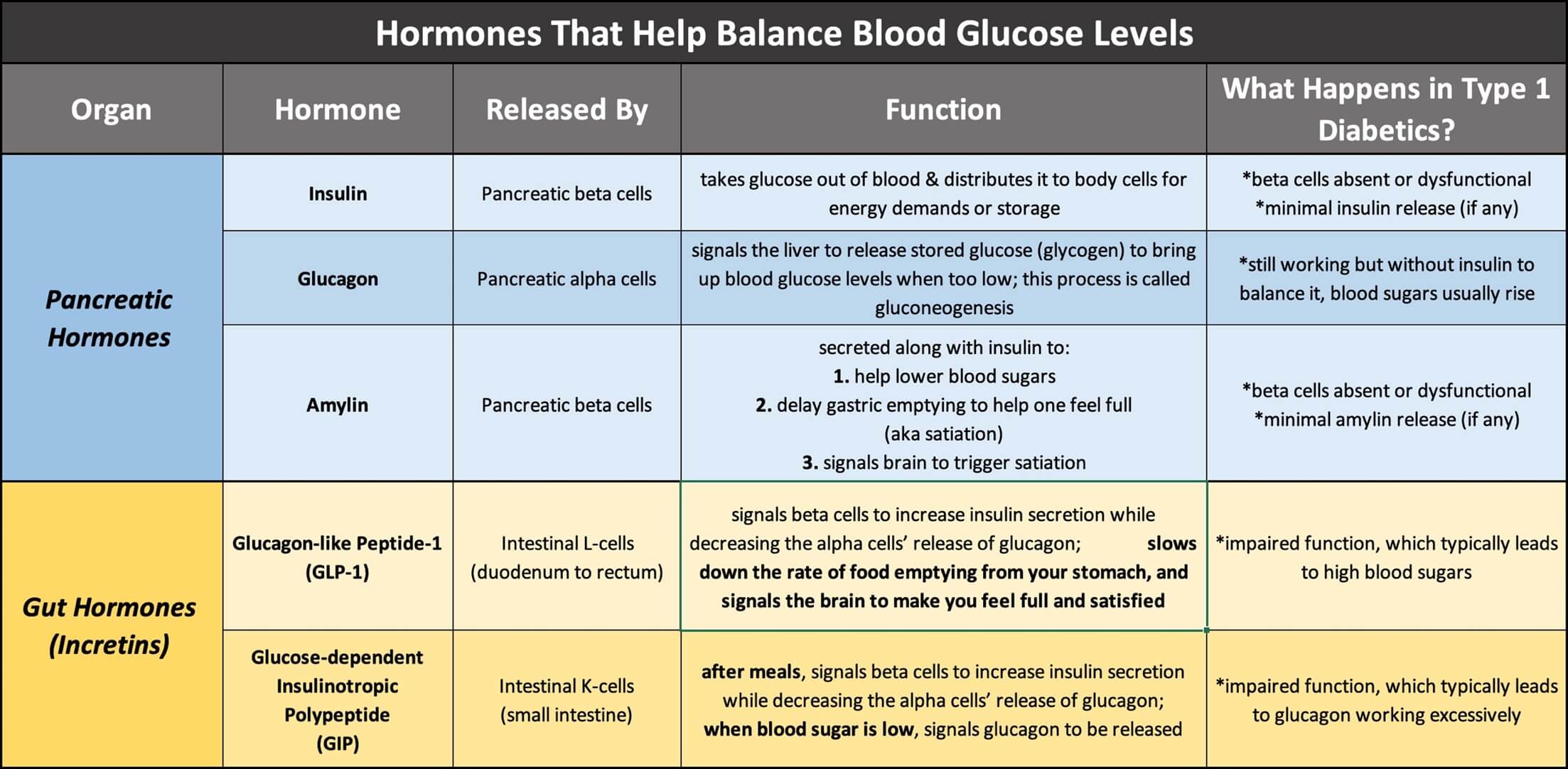 Click on table to enlarge.
Lastly, epinephrine, cortisol, and growth hormone are stress hormones that typically make blood sugars rise to ensure enough energy is ready to use for any fight or flight situation currently present triggering this stress response.
Too much (chronic) stress may also impair blood sugar stability (13).
Inflammation
When gut dysfunction is present, it can cause inflammation, or swelling, in our body.
In fact, the one thing that’s present in any and every illness or negative health condition known to man is inflammation.
Gut inflammation can impair insulin function, leading to high blood sugar levels (14, 15).
Given how many type 1 diabetics are troubled with blood sugar stability, it appears insulin function can be impaired in nondiabetics and diabetics alike.
Some studies also suggest that inflammation in the gut might play a role in the development of type 1 diabetes, especially in children (16).
Autoimmune Response
Type 1 diabetes is an autoimmune disease, which means that the body’s immune system mistakenly attacks its own healthy cells.
The type 1 diabetic example of this autoimmune effect is the immune system attacks the pancreatic beta cells that make insulin.
Some scientists think that problems in the gut might play a role in this autoimmune response.
For example, a leaky gut, where the gut lining becomes more permeable, could allow harmful substances to enter the bloodstream, leading to an autoimmune reaction (17).
We already know that if gut function is impaired, its ability to protect its host (you) from pathogens reduces.
It’s common for those with autoimmunity to also have gut dysbiosis.
As a result, there may be more hurdles to jump over towards better blood sugar management among type 1 diabetics.
This is the very reason why some dietary suggestions may be ineffective among type 1 diabetics for a while.
There may be a host of underlying gut problems that are minimally affected by these positive dietary changes.
If months or years have gone by without any diabetic improvement on the advice of your diabetic physician or educators, gut issues likely need to be adequately assessed and treated accordingly.
Given how common conditions like gut dysbiosis is present among type 1 diabetics, it’s definitely something worth considering if nothing else is working.
How is the Gut Connected to Depression and Anxiety?

I’m hoping you’re starting to appreciate the vital importance of gut health among type 1 diabetics.
Of all the things you’ve read about our gut’s influence on health, it also plays a big role in our feelings and mood, including conditions like depression and anxiety.
Let’s explore this more.
The Gut-Brain Connection
As you learned earlier, our gut and our brain are in constant communication (18).
This communication goes both ways: our brain can send messages to our gut, and our gut can send messages to our brain.
This is another example of a bi-directional relationship where one can influence the other.
Another name for this bi-directional relationship is the gut-brain axis.
For example, have you ever felt butterflies in your stomach when you were nervous or excited?
That’s an example of the gut-brain axis at work!
How Does the Gut Affect the Brain?
Our gut can send messages to our brain in several ways that might affect our mood and feelings.
Here are a few ways how:
Gut Microbes
We know our gut is home to trillions of tiny microbes, such as bacteria, viruses, and fungi.
These and other microbes collectively make up the gut microbiome.
We know of their assistance with digesting food, protecting us from pathogens, and helping to produce vitamins and energy.
But they also produce other chemicals that communicate to the brain. These chemicals can affect our moods (19).
Some of these chemicals are the same ones that our brain uses to communicate and regulate mood, like serotonin and dopamine.
If the balance of these gut microbes is off (gut dysbiosis), it could affect the levels of these chemicals, which could then affect our mood and lead to conditions like depression and anxiety (20).
Inflammation
With gut health compromised, it naturally leads to intestinal inflammation.
Given what we now know of the gut’s constant communication with the brain, this inflammation can add to impaired brain function that may lead to altered moods.
Some research suggests that people with depression typically have higher levels of inflammation present in their bodies (21).
If you add a poor diet and/or volatile blood sugars, this can be like adding gasoline to a fire with more severe depressive risks (22).
Stress Response
Our gut also plays a role in how our body responds to stress.
When we’re stressed, our body produces a hormone called cortisol.
This is part of our body’s “fight or flight” response.
But if our body produces too much cortisol for too long (aka chronic stress), it can lead to feelings of anxiety and depression.
Our gut microbes can actually help regulate this stress response, but if our gut isn’t healthy, this regulation might not work as well (23, 24).
What Can We Do to Keep Our Blood Sugars & Gut Healthy?
Given all these connections among the gut, blood glucose levels, the brain, inflammation, and autoimmunity, it’s clear that keeping our gut healthy is important for our overall health.
Here are some ways we can do that:
Diet
What we eat can greatly impact our gut and diabetic health!
As stated in the previous post, a focus on more nutrient-dense whole food intake is strongly recommended as long as it’s medically tolerable.
Ensuring adequate fermentable fiber and foods, and soluble fiber consumption is another important factor that promotes gut and diabetic health.
On the other end, avoiding inflammatory and processed foods that typically spike blood sugars, like many junk foods, should also be strongly considered.
Lastly, drastically reducing carbohydrate intake typically has many positive blood sugar outcomes as outlined in part 2.
In fact, one study even suggests higher dietary protein intake may reduce different levels of depression (25).
Exercise
Regular physical activity can also help keep our gut healthy by reducing inflammation and promoting the growth of healthy gut microbes (26).
Routine exercise will also help increase insulin sensitivity, which helps to break down glucose easier and with less insulin (27)!
Sleep
Getting enough sleep is vital for diabetes, gut, brain, and autoimmune health.
Another bi-directional relationship exists between your gut microbes and sleep (28).
Compromise to either one (or both) can lead to increased inflammation, gut, sleep, and blood sugar distress.
Stress Management
Since stress can harm our gut health and increase inflammation, finding ways to manage stress can be beneficial.
This could include things like deep breathing exercises, yoga, meditation, or talking to a counselor or therapist.
Being part of a positive community will typically also help reinforce mitigating stress, i.e. playing softball or bowling, taking a gardening class, or teaching.
Summary
Gut Basics
- The gut has 2 main functions
-
- to absorb nutrients
- to protect the body from pathogens alongside the immune system
-
- When there is an unhealthy balance of gut microbes, this can lead to a condition known as gut dysbiosis
- There’s almost no aspect of illness or disease that isn’t influenced by the gut, including but not limited to blood sugars, insulin resistance/sensitivity, autoimmunity, and mental health
How are blood sugars and the gut connected?
- when gut dysfunction is present, it can alter nutrient absorption and increase insulin resistance making it more difficult to reliably predict blood glucose levels with and between meals
- gut microbes and hormones, both, help insulin to function better but when gut dysbiosis is present, this may impair their influence on insulin
- inflammation is present in every and any disease or sickness and may impair insulin function as a result of gut impairment
- gut dysbiosis is commonly seen among those with autoimmunity and type 1 diabetes
The Gut-Brain Axis
- the gut and brain are in constant communication with one another
- gut dysfunction can impair this communication, leading to altered mental health, including depression and anxiety
- unstable blood sugars further complicate this either as a cause or effect
What can we do to keep our blood sugars and gut healthy?
- consume plenty of fermentable fibers and foods, in addition to soluble fibers (vegetables) and resistant starch (I go over this in more detail here)
- supplementing with some fibers is encouraged as many of them are high in carbs
- exercise, sleep, and stress management all help gut health while increasing insulin sensitivity
I’m hoping you found this information useful and educational.
Admittingly, with as many type 1 diabetic problems I’ve answered, I’ve also likely opened many other doors of questions, too!
If that’s the case, please feel free to reach out and let me know!
References
2. https://celiac.org/about-celiac-disease/related-conditions/diabetes-and-celiac-disease/
3. https://pubmed.ncbi.nlm.nih.gov/31058161/
4. https://pubmed.ncbi.nlm.nih.gov/25092354/
5. https://pubmed.ncbi.nlm.nih.gov/33803407/
6. https://www.ncbi.nlm.nih.gov/pmc/articles/PMC6854958/.
7. https://www.ncbi.nlm.nih.gov/pmc/articles/PMC4367209/.
8. https://www.cas.org/resources/cas-insights/emerging-science/how-your-gut-microbiome-linked-depression-and-anxiety
9. https://www.ncbi.nlm.nih.gov/pmc/articles/PMC6363653/
10. https://www.bmj.com/content/361/bmj.k2179
11. https://www.ncbi.nlm.nih.gov/pmc/articles/PMC3705322/
12. https://www.ncbi.nlm.nih.gov/pmc/articles/PMC2696340/.
13. https://pubmed.ncbi.nlm.nih.gov/1425110/.
14. https://www.jcrsmed.org/article.asp?issn=2455-3069
15. https://www.ncbi.nlm.nih.gov/pmc/articles/PMC7596417/
16. https://www.frontiersin.org/articles/10.3389/fendo.2020.00125/.
17. https://www.ncbi.nlm.nih.gov/pmc/articles/PMC7767453/
18. https://hms.harvard.edu/news-events/publications-archive/brain/gut-brain.
19. https://www.ncbi.nlm.nih.gov/pmc/articles/PMC6005194/.
20. https://www.sciencedirect.com/science/article/abs/pii/S0166432822003497
21. https://www.ncbi.nlm.nih.gov/pmc/articles/PMC6658985/
22. https://diabetes.org/diabetes/type-1/mental-health.
23. https://www.sciencedirect.com/science/article/pii/S2352289521000023
24. https://www.ncbi.nlm.nih.gov/pmc/articles/PMC7213601/
25. https://www.sciencedirect.com/science/article/pii/S1469029223000110
26. https://www.ncbi.nlm.nih.gov/pmc/articles/PMC5357536/
27. https://www.ncbi.nlm.nih.gov/pmc/articles/PMC5569266/
28. https://pubmed.ncbi.nlm.nih.gov/34479058/